Where it comes from
The Guimaras Carabao mango grows on volcanic-limestone soil warmed by steady sea breezes. Generations of careful grafting have produced a thin-skinned, fiberless fruit with a honeyed, slightly floral sweetness.
Fruit of the island
Ask anyone in the Visayas about Guimaras and they will say one word: mango. Here is what makes it special, and how to enjoy it at its best.
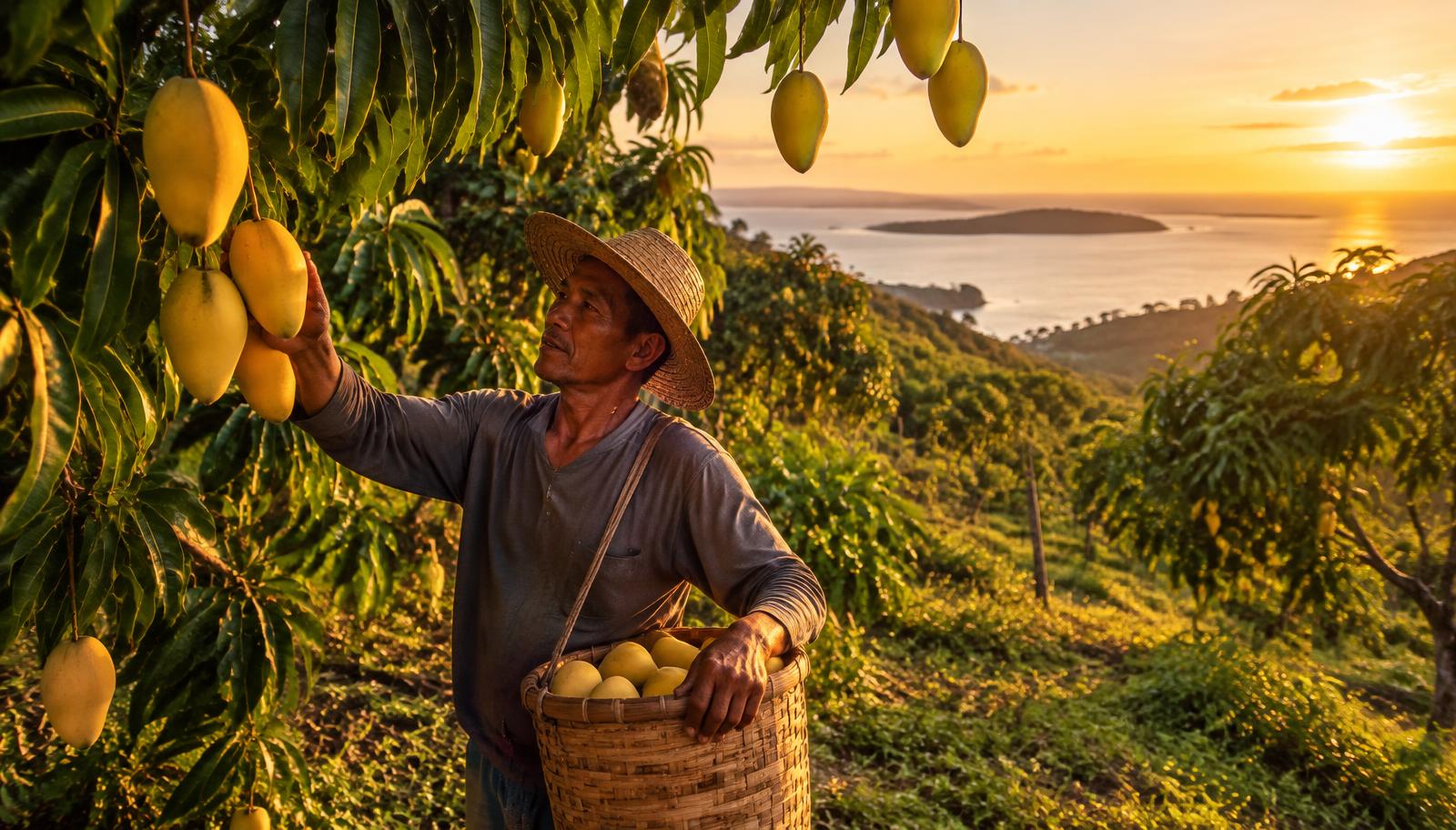
The Guimaras Carabao mango grows on volcanic-limestone soil warmed by steady sea breezes. Generations of careful grafting have produced a thin-skinned, fiberless fruit with a honeyed, slightly floral sweetness.
To keep the island free of mango pulp weevil and seed borer, no mangoes from outside may be brought onto Guimaras. Bags are checked at the ports. It is a small inconvenience that protects the whole harvest.
Flowering is induced from late in the year, and the main harvest runs from roughly March to June, peaking in April and May. Smaller off-season harvests appear in some orchards later in the year.
The Carabao mango dominates, but you will also meet Pico, Katchamitha (Indian) and native strains grown for pickling and green-mango snacks.
Orchards are spread across Jordan, Buenavista and San Lorenzo, from family plots of a dozen trees to the large research orchards run by the provincial government.
Buy ripe fruit at Jordan and Buenavista markets in season. Dried mango, mango piaya, jam and mango ketchup are sold all year at pasalubong shops near the ports.